
 Sin categoría




Blueberry Container Design: Smart Containers Transform 2026 Commercial Berry Production
Commercial blueberry production is undergoing a fundamental transformation in 2026. Growers across North America, South America, and Australia are abandoning traditional planting methods for advanced container systems. This shift represents the most significant change in blueberry cultivation since the industry’s expansion in the 1980s.
Why Container-Based Blueberry Production Matters
Blueberry growers face unprecedented challenges in 2026. Climate volatility, water scarcity, and rising land costs make traditional ground planting increasingly unviable. Container-based production offers solutions to these modern challenges while delivering superior yields and profitability.
Smart container design transforms commercial berry production through improved root health, climate adaptation, and operational efficiency. Container systems enable production on marginal land, reduce water usage by 20-30%, and increase yields by 25-35% compared to traditional methods.
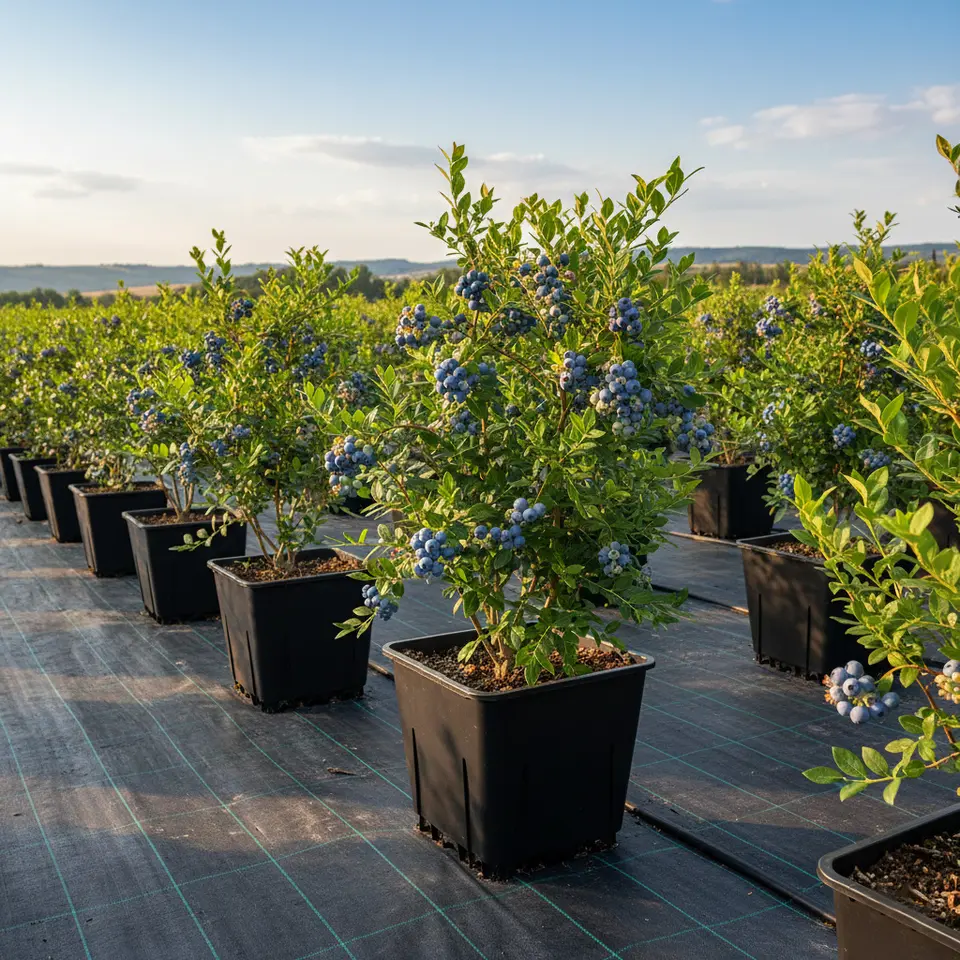
The Root Revolution: Air-Pruning Technology
Root circling destroys blueberry productivity in traditional containers. When roots encounter smooth container walls, they begin circling instead of branching outward. This creates a tangled, inefficient root mass that suffocates the plant and reduces yields significantly.
How Air-Pruning Works
Modern blueberry containers use air-pruning technology to solve this fundamental problem. The concept is elegantly simple: when root tips contact air, they naturally branch outward instead of continuing to circle. This creates a fibrous, efficient root system that dramatically improves nutrient uptake and plant vigor.
Smart containers achieve air-pruning through engineered design:
- Pyramid-shaped protrusions redirect roots downward toward drainage holes
- Multiple drainage holes ensure roots encounter air at various points
- Sidewall ventilation prevents oxygen starvation in outer root zones
- The result: dense, white root systems instead of tangled masses
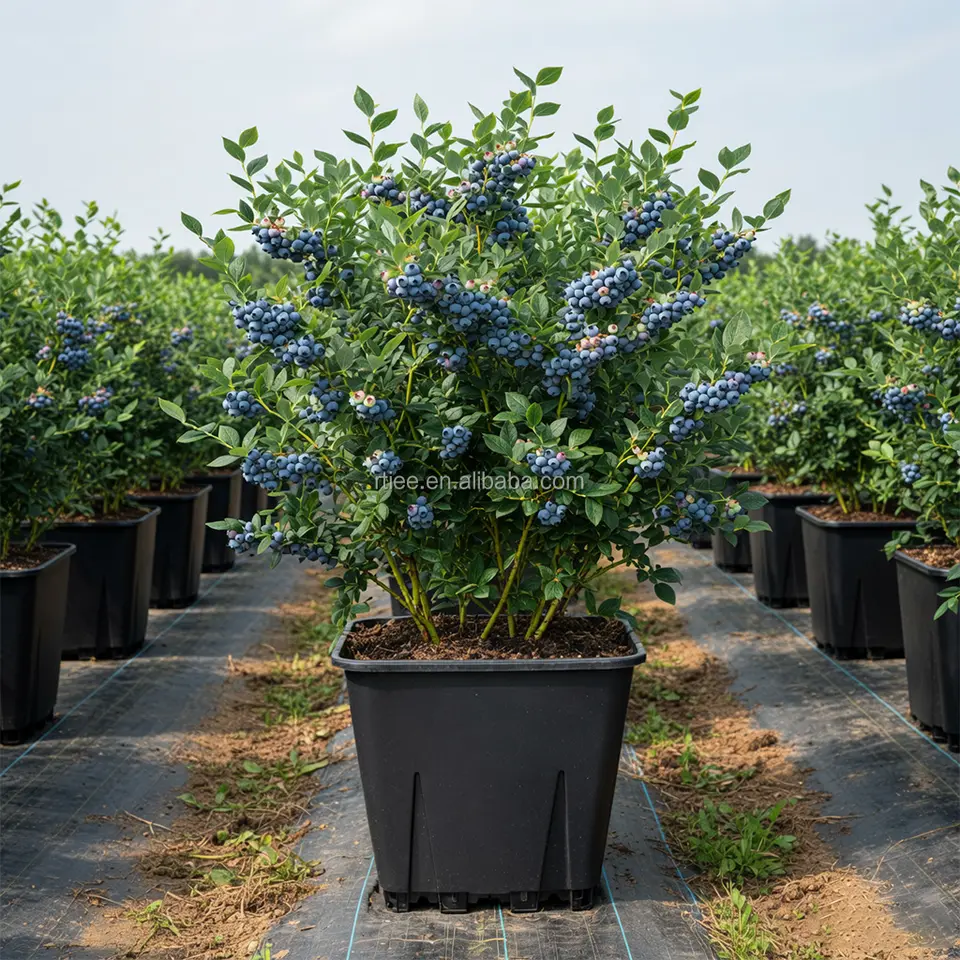
Drainage Innovation: Beyond Simple Holes
Blueberry roots demand excellent drainage. They cannot tolerate standing water or waterlogged soil. However, drainage in commercial blueberry production involves more than just holes in the bottom of containers—it requires comprehensive water management systems.
Multi-Level Drainage Systems
Advanced blueberry containers feature drainage holes on the bottom and along lower sidewalls. This multi-level approach ensures uniform moisture distribution throughout the root ball while eliminating soggy pockets that cause root rot diseases.
Premium drainage designs include:
- Elevated bases or feet that prevent water pooling underneath
- Sidewall perforations that improve oxygen exchange
- Strategic hole placement for consistent moisture levels
- Protection against root diseases in rainy climates
Climate-Specific Drainage Solutions
Different growing regions require different drainage approaches:
Hot, arid regions like California’s Central Valley benefit from containers that retain adequate moisture while preventing waterlogging. Lighter-colored containers reflect heat and reduce root zone temperatures.
Temperate, rainy regions like Chile’s Central Valley require maximum drainage capacity. Elevated bases and extensive drainage holes are essential to prevent root rot during heavy rainy seasons.
Tropical regions like Peru need excellent airflow and ventilation. These conditions prevent fungal diseases while maintaining adequate root zone moisture.
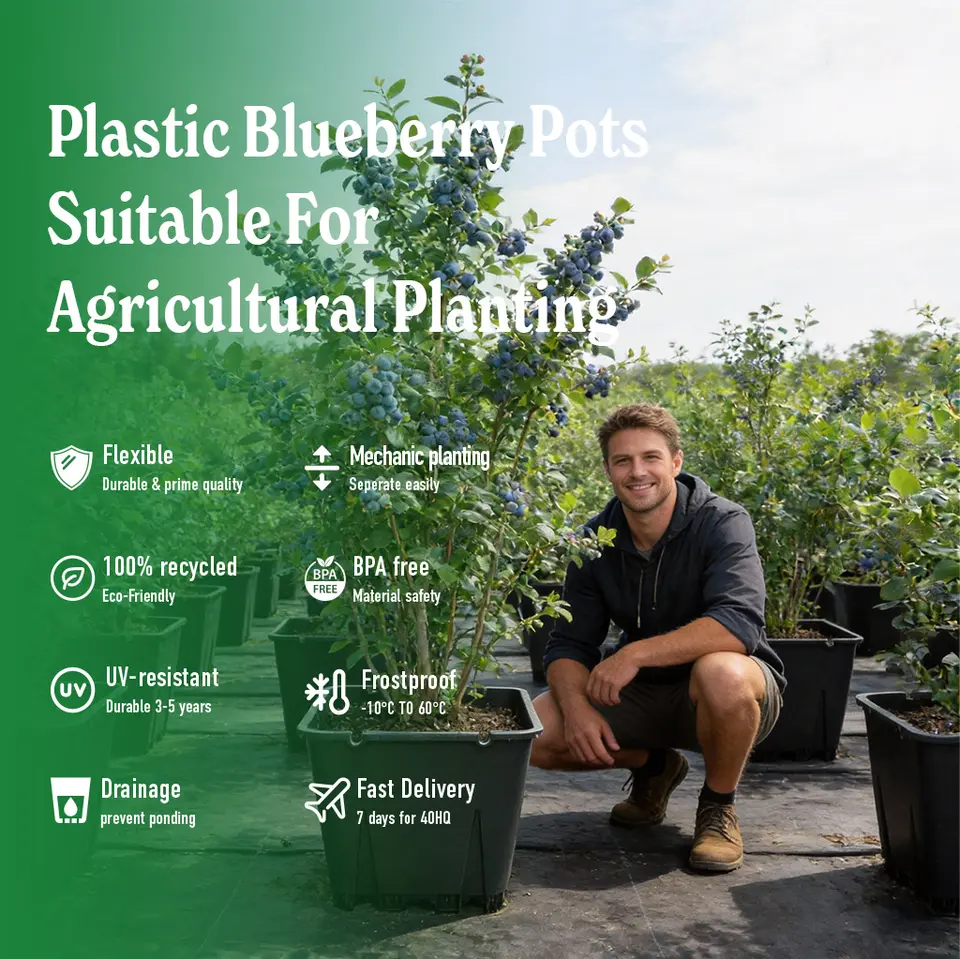
Material Science: UV-Stabilized Polypropylene Excellence
Container material selection determines longevity and performance in commercial blueberry production. Cheap plastic pots degrade quickly under UV exposure, requiring frequent replacement that disrupts operations and increases costs.
Why UV-Stabilized PP Matters
High-quality blueberry containers use UV-stabilized polypropylene (PP) plastic engineered for long-term outdoor exposure. This material resists sun damage for 8+ years in full-sun field conditions, compared to 2-3 years for economy-grade alternatives.
Material science advantages include:
- Resistance to UV degradation and brittleness
- Flexibility that prevents cracking during handling
- Consistent performance across temperature extremes
- Cost efficiency through reduced replacement frequency
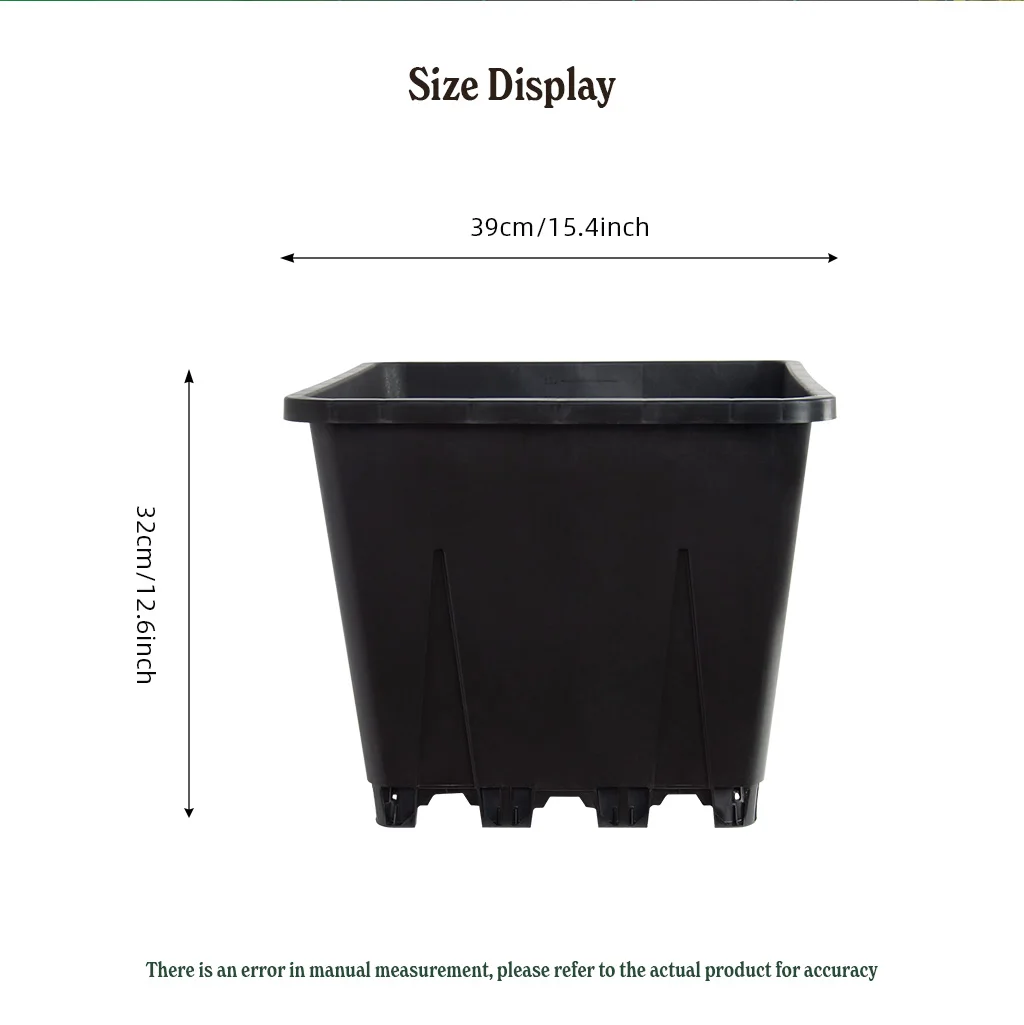
Economic Analysis: Premium vs Economy Containers
Consider a 5-acre commercial operation comparing container options:
Economy-grade containers ($2.50 each, 3-year lifespan):
- Initial investment: $25,000
- Year 4-6 replacement: $25,000
- Root disturbance yield loss: $12,000-18,000
- Total 6-year cost: $62,000-68,000
Premium containers ($5.00 each, 8-year lifespan):
- Initial investment: $50,000
- No replacement required (lasts full 6 years)
- No yield loss from repotting
- 10-15% yield increase from better root systems
- Total 6-year cost: $45,000 with increased revenue
Premium containers deliver superior economics over three years while eliminating root system disruption. The investment pays for itself through reduced replacement costs, increased yields, and operational efficiency.
Space Optimization: Square Container Advantages
Commercial operations increasingly choose square containers over round designs. This preference stems from practical advantages that impact profitability and operational efficiency.
Space Utilization Benefits
Square containers provide 20-25% more growing space efficiency than round containers. This allows more plants in the same greenhouse or field area, directly impacting production capacity and revenue.
Additional square container advantages include:
- Better fit for greenhouse benches and growing pads
- More sidewall surface area for air-pruning effects
- Improved stability during handling and transport
- Easier stacking and storage when empty
Root Zone Benefits
Square containers provide more root surface area along sidewalls compared to round containers of the same volume. This increased surface area enhances air-pruning benefits and creates more efficient root systems.
Versatility Beyond Blueberries
While optimized for blueberries, smart container systems benefit numerous crops. This versatility allows commercial operations to standardize equipment across multiple crops.
Compatible crops include:
- Raspberries and other cane berries
- Currants and gooseberries
- Acid-loving ornamentals like azaleas and camellias
- Other specialty fruit crops
Climate Resilience: 2026 Production Challenges
Climate change creates unprecedented challenges for commercial blueberry producers. Smart container systems provide resilience against these emerging threats.
Temperature Extremes
Heat waves are becoming more frequent and intense. Container-grown blueberries demonstrate 15-20% better heat tolerance because root zones are easier to cool through shading and irrigation.
Late spring frosts also threaten production. Container systems enable rapid protection deployment—moving plants under cover or applying frost cloth much more easily than ground plantings.
Water Scarcity Solutions
Water restrictions are tightening across major growing regions. Container-based blueberry production uses 20-30% less water per unit of fruit produced compared to ground-grown plants.
Water efficiency advantages include:
- Precise irrigation that eliminates waste
- Reduced evaporation through controlled environments
- Ability to implement water recycling systems
- Compliance with increasingly strict water regulations
The Economic Case for Container-Based Production
The transition to container-based blueberry production represents sound economic strategy for commercial operations. While initial investment is higher, the returns justify the expenditure through multiple channels.
Revenue Enhancement
Premium containers increase production revenue through:
- 25-35% higher yields from improved root health
- Extended production seasons through climate control
- Premium pricing for quality consistency
- Reduced crop losses from weather events
Cost Reduction
Container systems reduce operational costs through:
- Lower water usage (20-30% reduction)
- Reduced chemical inputs (50-70% decrease)
- Labor savings through automation compatibility
- Elimination of soil preparation and maintenance costs
Risk Mitigation
Climate and market risks are reduced through:
- Protection against weather extremes
- Consistent quality for market requirements
- Production flexibility for market timing
- Resilience against supply chain disruptions
Implementation Strategy: Phased Transition
Successful transition to container-based blueberry production requires careful planning and phased implementation.
Phase 1: Validation (6 months)
- Trial container systems on 10-20% of operation
- Monitor performance metrics and plant health
- Compare yields against ground-based production
- Refine container selection and management practices
Phase 2: Expansion (12-18 months)
- Expand to 50% of production based on validation results
- Implement supporting infrastructure and systems
- Train staff on container-based management
- Optimize irrigation and fertilization programs
Phase 3: Full Transition (24+ months)
- Complete conversion to container-based production
- Standardize operations and procedures
- Integrate automation and monitoring systems
- Optimize production for maximum efficiency
Future Outlook: 2030 Projections
Based on current adoption rates and economic data, commercial blueberry production will undergo dramatic transformation by 2030.
Projected industry changes include:
- 70-80% of production using container systems
- Complete integration with sensor networks and AI management
- Emphasis on sustainability metrics for market access
- Urban and peri-urban production expansion
- Labor reductions through automation compatibility
Conclusion: The Future is Container-Based
The commercial blueberry industry’s transformation to container-based production represents opportunity rather than disruption. Smart container design, advanced materials, and engineered drainage systems create production possibilities that were impossible just a decade ago.
Growers embracing container systems today position themselves for competitive advantage tomorrow. The question for every commercial operation is not whether to transition, but how quickly they can implement this proven approach.
Contact Ronbo Plastic for premium blueberry containers engineered for commercial production success. Our 8+ year durability, advanced root-zone designs, and climate-specific solutions deliver superior economics and operational efficiency.
Related Resources
Complete Guide to Home Blueberry Growing
Balcony Blueberry Production for Urban Growers
Wholesale Container Sourcing for Commercial Operations
Container Inventory Management Best Practices